
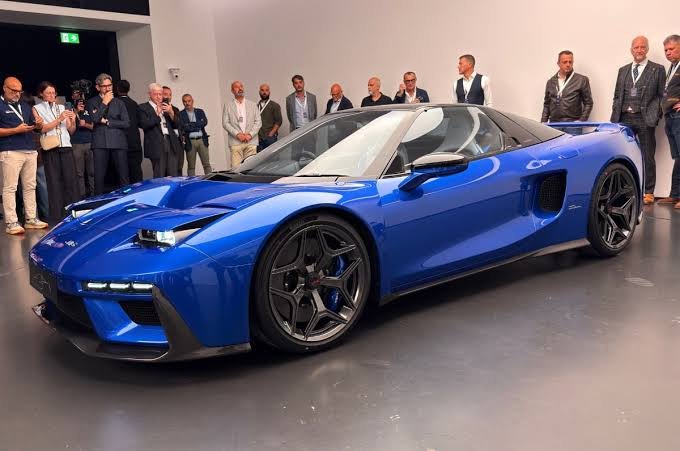
The automotive world thrives on nostalgia, but every so often, a car comes along that takes a legendary classic old model and elevates it into a whole new tier. That is exactly what has happened with the JAS Tensei. Named after the Japanese word for “rebirth,” the JAS Tensei is an ultra-exclusive, high-performance supercar built on the bones of the iconic first-generation Honda NSX.
Created through a collaboration between Italian engineering firm JAS Motorsport, legendary design house Pininfarina, and renowned engine builders Judd Power, the JAS Tensei honors classic 1990s supercar heritage with modern technology. For car enthusiasts and lovers of vintage classics, it shows how a classic old model can be reimagined for a modern era.
Featured Image Recommendation: A high-resolution tracking shot of the JAS Tensei in motion on a coastal road, showing off its Pininfarina carbon-fiber bodywork, widened stance, and modernized pop-up headlights.
History and Background of the JAS Tensei
The story of the JAS Tensei combines motorsport engineering and automotive design heritage. JAS Motorsport, based near Milan, Italy, has been Honda’s long-standing official racing partner in touring car and GT racing. To celebrate the 35th anniversary of the original Honda NSX, JAS Motorsport decided to build the ultimate analog supercar.
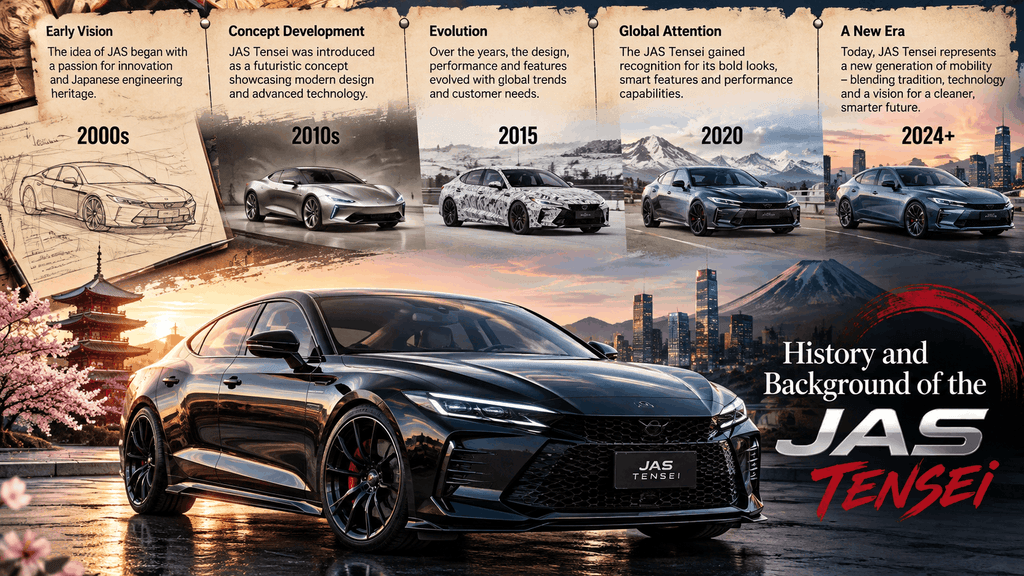
Rather than creating a new car from scratch, JAS Motorsport uses donor chassis from first-generation NSX models and re-engineers them completely. The project also brings design history full circle. In 1984, Pininfarina designed the HP-X concept for Honda, which inspired the original NSX. Four decades later, Pininfarina returned to style the bodywork of the JAS Tensei. It is officially classified as an ultra-exclusive, low-volume restomod supercar.
Exterior Design and Body Styling
The exterior design of the JAS Tensei retains the silhouette of the original Honda NSX while giving it wider and lower proportions. Styled by Pininfarina, the car is 6.7 inches wider at the front and 7.5 inches wider at the rear, featuring a 2.1-inch longer wheelbase to shorten the overhangs.
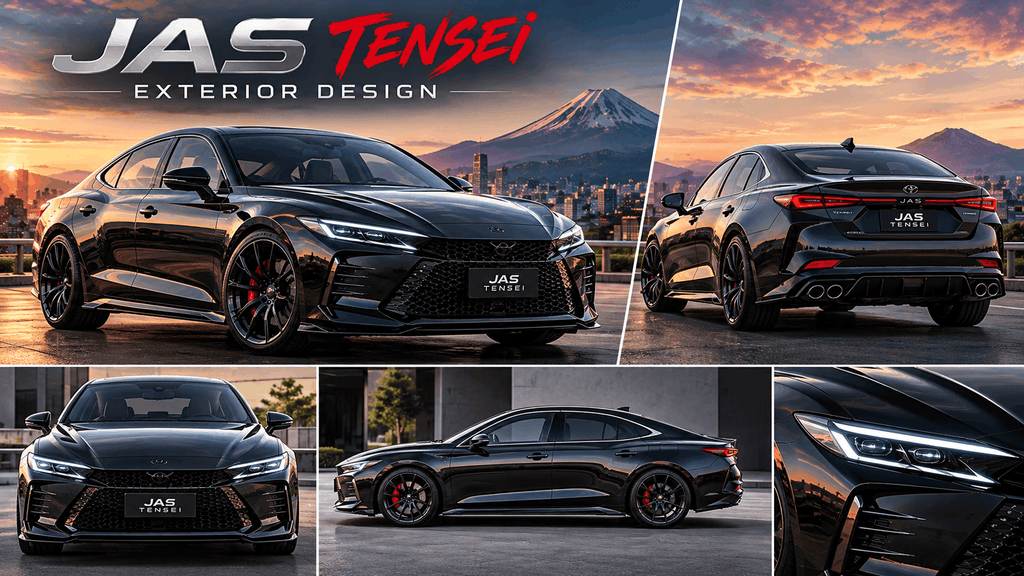
Every exterior panel is constructed from lightweight carbon fiber. Pininfarina preserved key classic elements, including modern titanium-mechanism pop-up LED headlights, the rectangular side air intakes, and the signature rear wing integrated into the rear light strip. Aerodynamics are enhanced with a carbon front splitter, underbody floor, and rear diffuser.
Interior Design and Comfort
Inside, the cabin of the JAS Tensei avoids screen-heavy digital setups, focusing instead on driver engagement and analog feel. The overall layout keeps the cockpit ergonomics of the 1990s original while using premium modern materials.
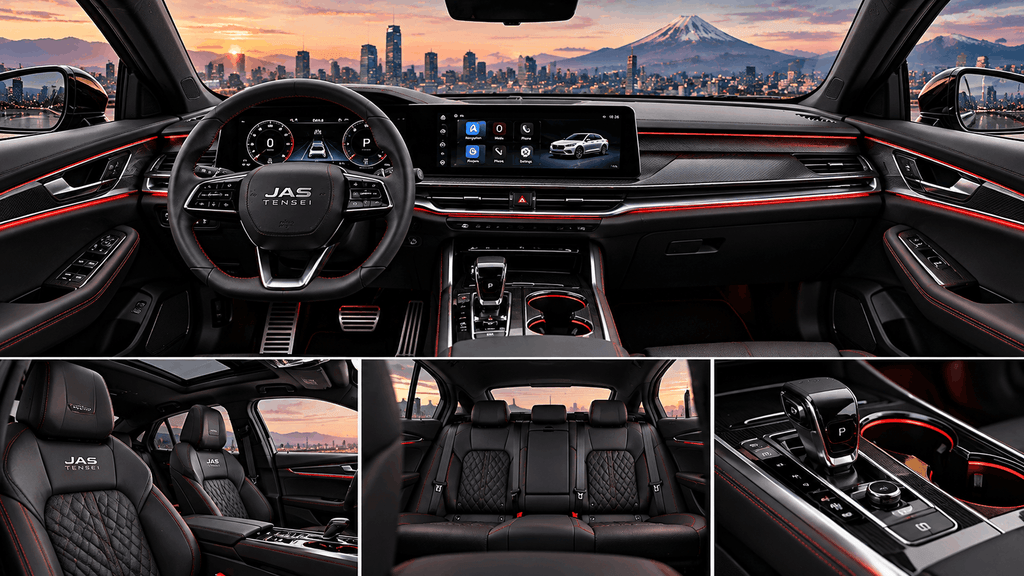
The interior features full-grain Italian leather, Alcantara, and exposed carbon fiber panels. The driver sits in race-inspired Sabelt bucket seats facing a streamlined steering wheel. The instrument cluster combines analog-style gauges with minimalist digital telemetry readouts. Taking center stage on the console is a machined titanium shift knob for the manual gearbox.
Engine, Powertrain, and Performance
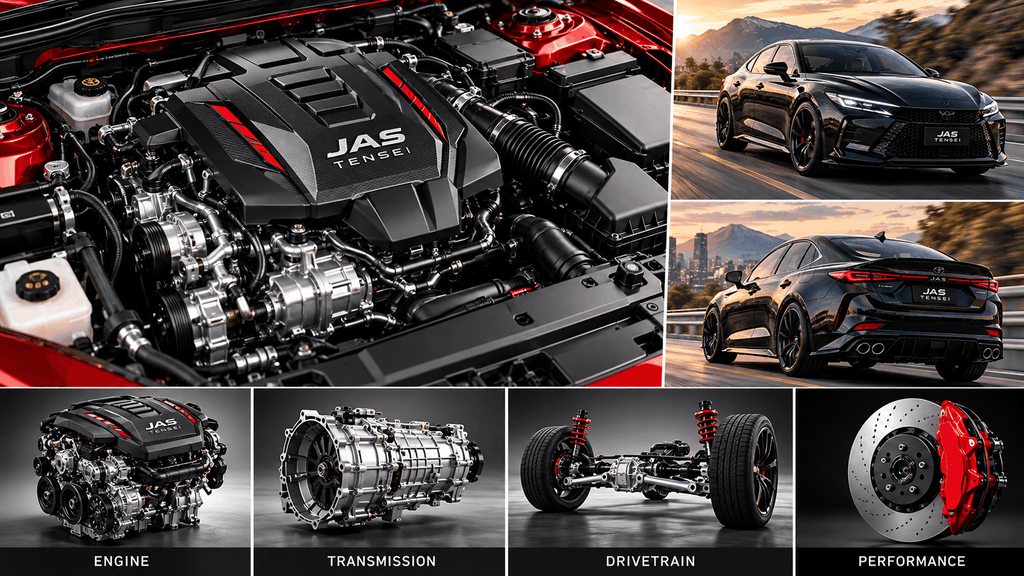
Under the rear deck lies a naturally aspirated V6 engine developed in partnership with racing specialist Judd Power. Starting with Honda’s original V6 block, Judd Power reworked the engine with a custom crankshaft, titanium valves, and new camshafts.
Technical Specifications
- Engine: 3.4-liter to 3.5-liter naturally aspirated V6 (Judd Power tuning)
- Horsepower: 414 to 425 hp
- Rev Limit: 8,500 rpm
- Transmission: 6-speed manual with Torsen limited-slip differential
- Exhaust System: Inconel exhaust system with titanium tips
- Brakes: Brembo CCM-R carbon-ceramic discs
The car rides on billet-machined aluminum wishbones, multi-link rear suspension, and four-way adjustable KW coilovers. It rides on 19-inch front and 20-inch rear center-lock wheels fitted with performance tires.
Features and Technology
While the JAS Tensei is designed as a raw driver’s car, it incorporates modern motorsport technology to ensure stability and usability.
- KW Adjustable Suspension: Fully adjustable four-way coilover dampers for track and road setups.
- Hydraulic Front Lift System: Helps clear speed bumps and steep driveways.
- Motorsport Braking: High-performance Brembo CCM-R carbon-ceramic brake system.
- Custom Lighting: Modernized LED lighting integrated into classic pop-up headlight housings and rear light bars.
Fuel Economy, Range, and Driving Experience
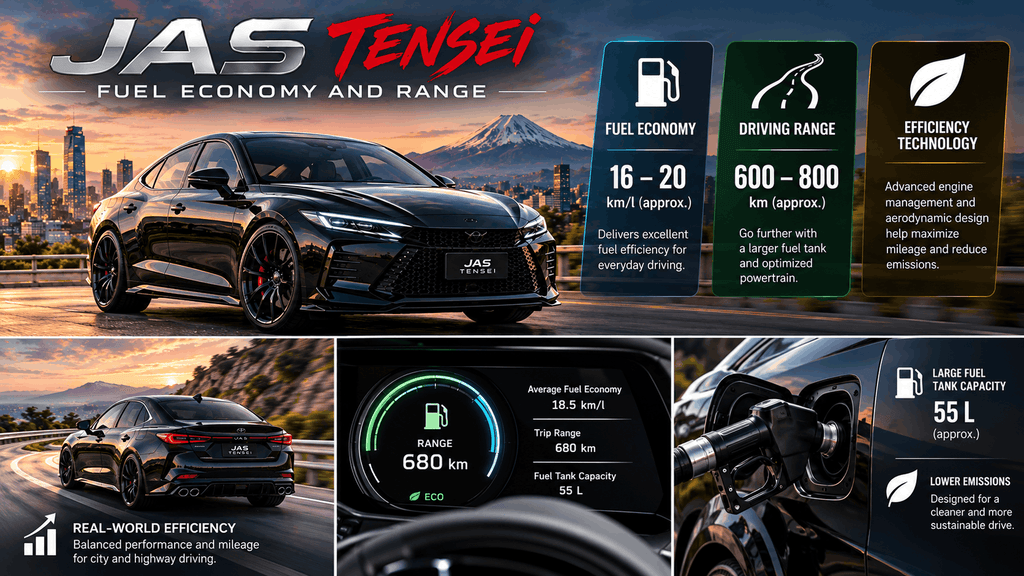
As a limited-production, hand-built supercar, official EPA or WLTP fuel economy figures are not recorded. Fuel efficiency is secondary to the driving experience in a vehicle of this nature.
Behind the wheel, the JAS Tensei offers a direct, visceral connection to the road. The combination of a high-revving 8,500 rpm naturally aspirated V6 engine, a short-throw six-speed manual gearbox, and lightweight carbon construction provides tactile feedback that modern turbocharged or electric supercars rarely match. The widened track and modern suspension provide flat, predictable cornering grip.
Price, Availability, and Market Position
The JAS Tensei is one of the most exclusive automotive projects on the market. Production is strictly capped at just 35 units globally, with each vehicle built to order at JAS Motorsport’s facility in Italy.
The price reflects its bespoke, handcrafted nature. The base price is set at approximately €880,000 (roughly $985,000 USD or £770,000). This figure does not include local taxes or the donor first-generation Honda NSX chassis required for the build.
How the JAS Tensei Compares with Other Models
The JAS Tensei operates in the high-end supercar restomod market. Rather than competing with standard showroom models, it stands alongside vehicles like Singer Porsche 911s or Cyan Racing Volvos.
Compared to modern hybrid or fully electric supercars, the JAS Tensei prioritizes lightweight mechanical simplicity over digital complexity. Compared to an original, unmodified 1990s Honda NSX, the JAS Tensei offers over 130 additional horsepower, carbon-fiber aerodynamics, wider tracks, and modern carbon-ceramic stopping power.
Why the JAS Tensei Is Worth Knowing About
The JAS Tensei stands out because it preserves the spirit of a legendary classic old model while applying modern engineering. At a time when many new performance cars are becoming heavier and more automated, the JAS Tensei celebrates manual gear shifts, natural engine aspiration, and lightweight design. For enthusiasts, it represents a remarkable tribute to 1990s supercar history.
Frequently Asked Questions
What is the JAS Tensei?
The JAS Tensei is a high-performance restomod supercar built on the chassis of the first-generation Honda NSX, featuring Pininfarina carbon-fiber bodywork and a Judd Power-tuned V6 engine.
Who manufactures the JAS Tensei?
It is engineered and built by Italian racing specialist JAS Motorsport in Italy, with body design by Pininfarina and engine tuning by Judd Power.
What engine or powertrain does the JAS Tensei use?
It uses a naturally aspirated V6 petrol engine producing up to 425 horsepower, paired with a six-speed manual transmission.
What is the price of the JAS Tensei?
The JAS Tensei is priced at approximately €880,000 (around $985,000 USD), excluding taxes and the cost of the donor Honda NSX chassis.
Is the JAS Tensei an old model or a new vehicle?
It is a modern restomod built using a donor chassis from a classic first-generation Honda NSX, re-engineered with modern carbon fiber, suspension, and engine components.