
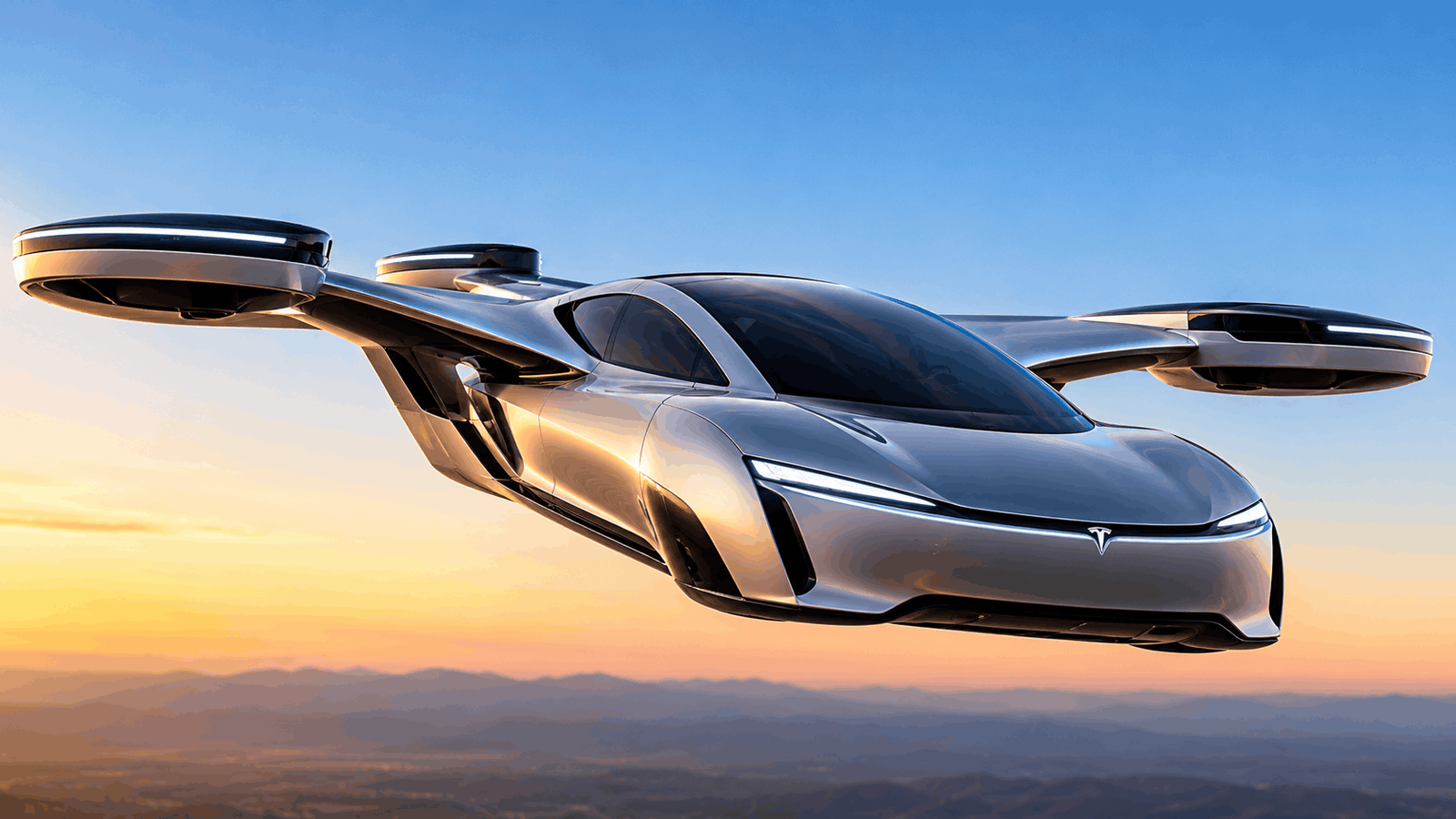
The Flying Tesla is one of the most searched ideas in future mobility, but Tesla has not announced or built a flying car. The buzz comes from Elon Musk’s comments over the years, especially about the next-generation Tesla Roadster and its proposed “SpaceX package” of cold-gas thrusters. Musk has joked that the car could “hover” or fly short distances. Those remarks are not an aircraft program, and no certified Tesla flying vehicle exists. Most “Tesla flying car” images online are fan concepts or AI renderings. This article separates verified information from speculation.
Flying Tesla Exterior Design
No official Tesla flying car exterior design exists. The only vehicle linked to flight talk is the Roadster, a low, aerodynamic two-door sports car revealed in 2017 as a concept. Its thruster package would add small nozzles for acceleration and handling, and it would not provide sustained flight.
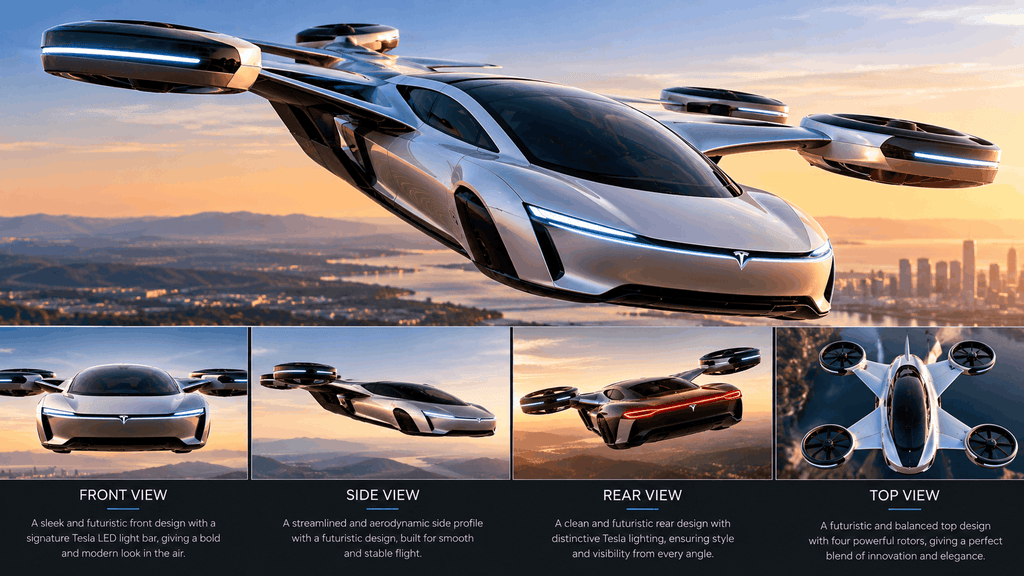
A true flying vehicle would look very different. Vertical takeoff and landing (VTOL) aircraft usually use rotors or ducted fans, fixed wings, and lightweight carbon-fiber structures. A road car cannot carry those parts without major changes. Any wings, rotors, or gull-wing doors seen in online images are conceptual possibilities, not Tesla specifications.
Flying Tesla Interior and Cabin Experience
Tesla has revealed no Tesla flying car interior. The 2017 Roadster concept showed a four-seat layout with a minimalist dashboard and a central touchscreen. That reflects Tesla’s current design language and says nothing about an aircraft cabin.
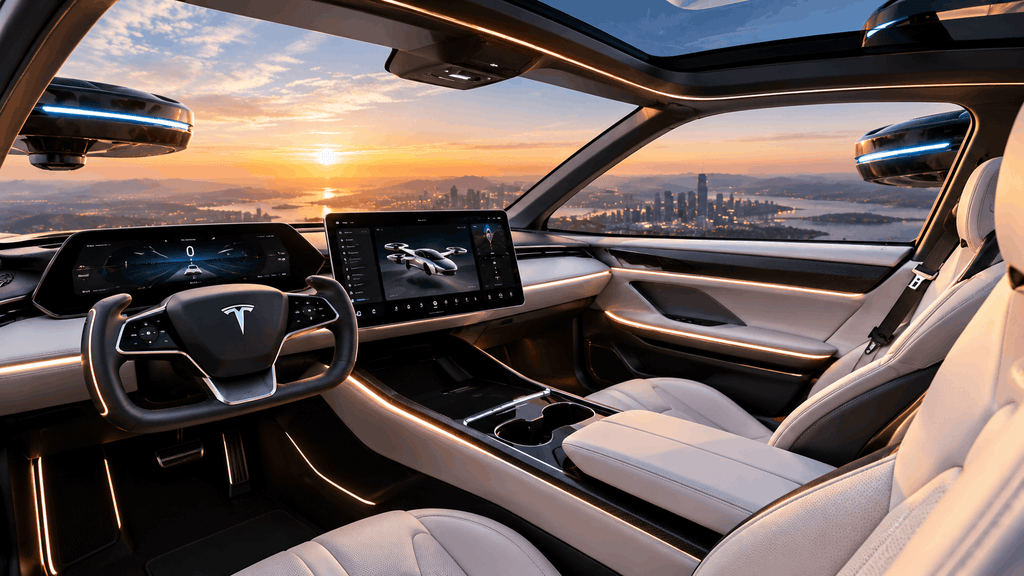
A flying vehicle would likely need flight displays, redundant controls, weight-saving materials, and seating built for aviation safety standards. Seat count, controls, and cabin materials remain unknown. Any interior image described as “official” should be treated with suspicion.
Battery, Motor, and Flying Technology
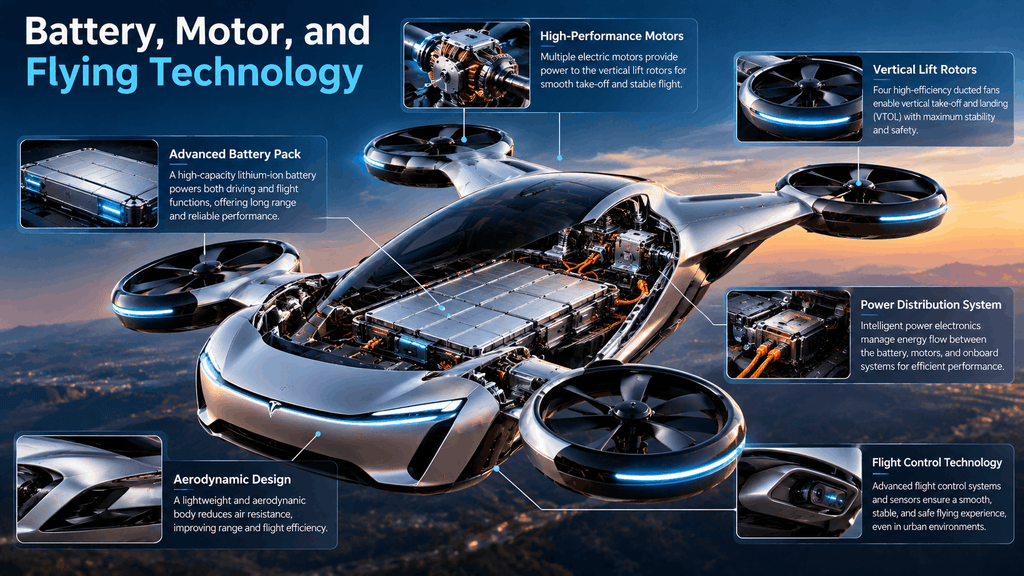
Electric flight is hard. Hovering takes far more power than driving, so a flying vehicle needs batteries that deliver very high power for short bursts and still stay light. Road-car batteries are optimized for energy storage and cost, while aviation packs must also meet strict safety, redundancy, and fire-containment rules.
Other challenges include heat during takeoff and landing, motor redundancy so a single failure is survivable, and software that keeps the aircraft stable. Tesla’s expertise in batteries, motors, and software helps, but it does not make a flying vehicle commercially viable on its own.
Performance, Top Speed, and Flying Range
There are no verified specifications for a Tesla flying car. Figures for flight speed, range, and payload are unconfirmed. The only numbers Tesla has published are for the ground-based Roadster concept: a claimed 250+ mph top speed and 620-mile range. These are manufacturer targets that have not been independently verified in a production car.
Real-world flight performance would depend on battery weight, passenger load, wind, temperature, and runway or landing-pad needs. Treat any specific flying range or top speed as speculation.
Smart Features, Safety, and Connectivity
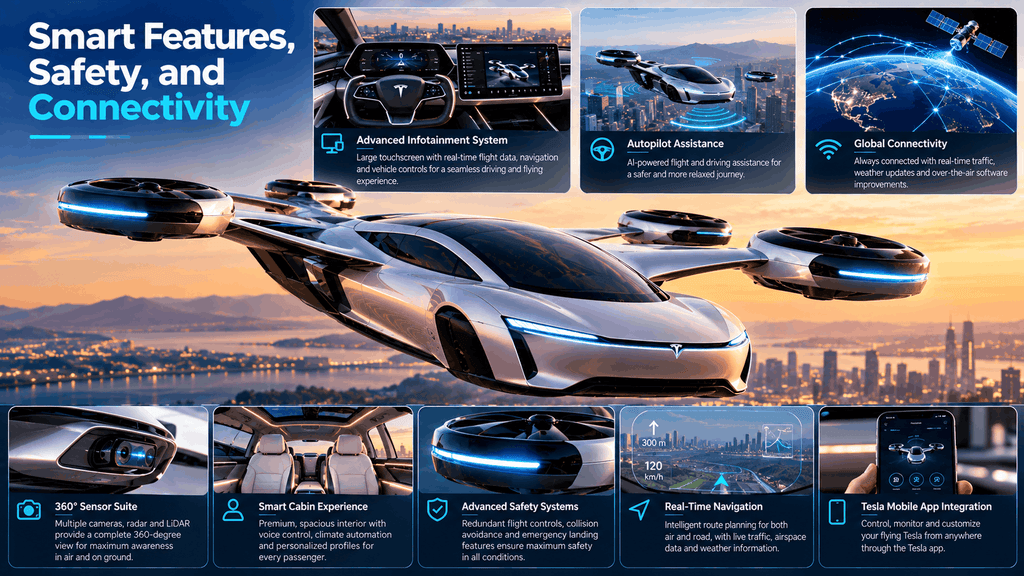
Tesla vehicles today offer over-the-air software updates, navigation, and driver-assistance features. These are road-vehicle systems. Autopilot and Full Self-Driving are not certified for aircraft operation.
A real flying vehicle would need hypothetical aviation features: obstacle and collision avoidance, flight monitoring, emergency landing systems, and backup power. Tesla has not described any of these.
Flying Tesla Price and Expected Launch Date
Tesla has not officially announced a flying car, a Tesla flying car price, a booking program, or a launch date. The only related pricing is the 2017 Roadster’s announced base price of $200,000, with a $50,000 reservation for the Founders Series, and that is a ground car whose delivery has repeatedly slipped. Musk has repeatedly delayed the Roadster’s unveiling, and I cannot confirm its current status.
Cost factors for any future flying vehicle would include aviation-grade batteries, certification, manufacturing, and maintenance. Commercial passenger flights would also need approval from regulators such as the FAA or EASA.
Market Potential and Future of Flying Cars
Electric air mobility could eventually serve urban air taxis and private travel. Companies such as Joby Aviation, Archer Aviation, and Alef Aeronautics are developing electric VTOL or flying-car designs, though their timelines and certification progress vary. Infrastructure, noise, safety, regulation, and affordability remain the main barriers.
Conclusion
Electric flying vehicles hold real promise, and public interest in a Flying Tesla is high. But Tesla has not confirmed a flying car, a price, or a launch date. Until it does, treat specifications and timelines as speculation, and rely on official announcements and regulators.
Frequently Asked Questions
Is Tesla officially making a flying car?
No. Tesla has made no official announcement of a flying car.
What is the expected price of the Flying Tesla?
No price exists. The 2017 Roadster base price of $200,000 applies only to that ground car.
When will the Tesla flying car launch?
There is no confirmed launch date.
What could the Flying Tesla interior look like?
Unknown. Tesla has released no flying-car interior, and online images are concepts.
How fast and how far could a Tesla flying car travel?
No verified figures exist. The 250+ mph and 620-mile claims belong to the Roadster, not a flying vehicle.