
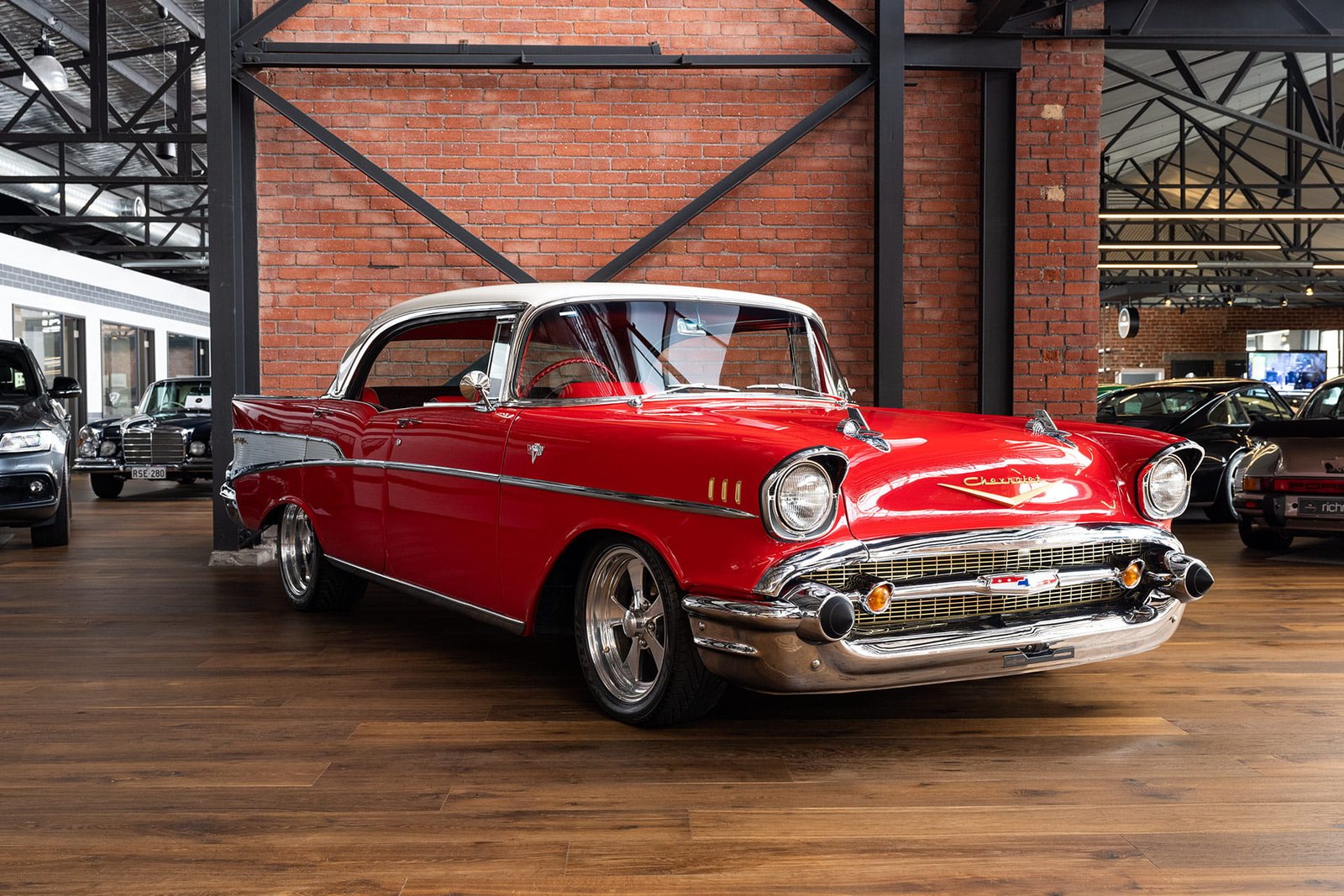
Few cars are recognised as quickly as the 1957 Chevrolet. Its sharp tailfins, wide grille and bright chrome still turn heads at car shows more than six decades later. It was never a new or latest-generation car by today’s standards. It is a classic old model that has become a symbol of 1950s America.
Many collectors consider the 1957 Chevrolet the high point of the “Tri-Five” years (1955 to 1957). It also gave Chevrolet a fresh engine and a place in performance history.
Why Was the 1957 Chevrolet So Important?
The 1957 model was the last of the three closely related Chevrolet generations that began in 1955. Those cars helped change Chevrolet’s image from sensible family transport to something stylish and exciting.
Chevrolet offered three trim levels in 1957:
- One-Fifty: the entry-level, no-frills choice
- Two-Ten: the middle trim, with more chrome and better interior finishes
- Bel Air: the top trim, with the richest trim and most visible brightwork
The 1957 Chevrolet Bel Air gets most of the attention today, but all three lines shared the same basic body design. The range also included sedans, hardtops, wagons and convertibles.
What Does the 1957 Chevrolet Exterior Look Like?
The 1957 Chevrolet exterior is the main reason for its fame. The front end has a wide grille and a bumper with a bold, chrome-heavy look. At the rear, the tailfins rise gently from the quarter panels, and the lamps sit neatly in the fins.
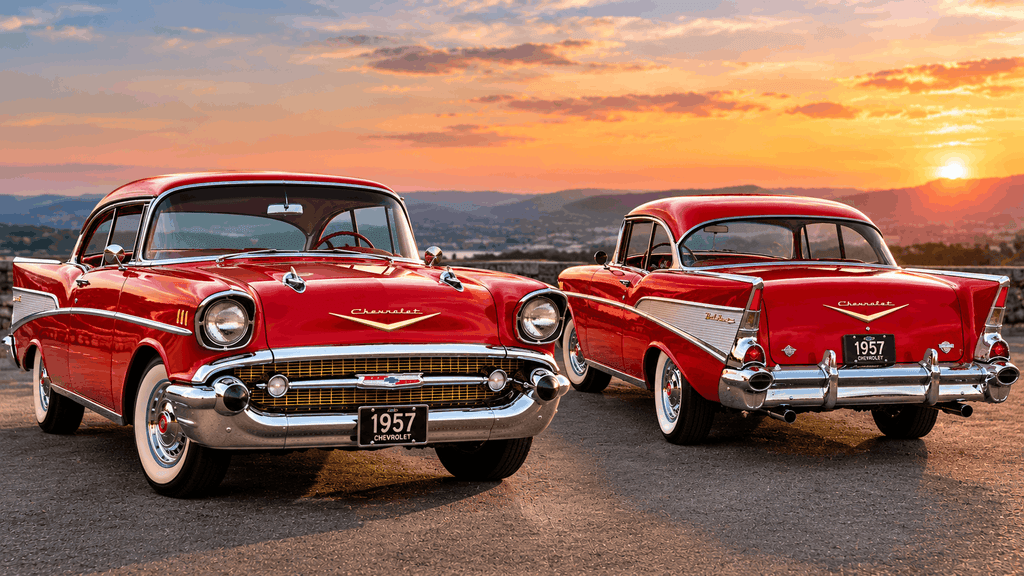
Trim differed by model. Bel Airs carried extra chrome and distinctive side trim, often with anodised aluminium panels. Two-tone paint was popular, and period colour combinations helped show off the car’s sweeping side lines.
Wheels were 14-inch steel units, often finished with hubcaps or full wheel covers. Together with the chrome bumpers and trim, they gave the car a polished but still approachable look.
What Is Inside a 1957 Chevrolet?
The 1957 Chevrolet interior reflects its era. The dashboard is mostly painted metal with chrome accents, and the instruments are simple and easy to read. The steering wheel is large and thin-rimmed, and the seats are wide and bench-style, trimmed in cloth and vinyl.
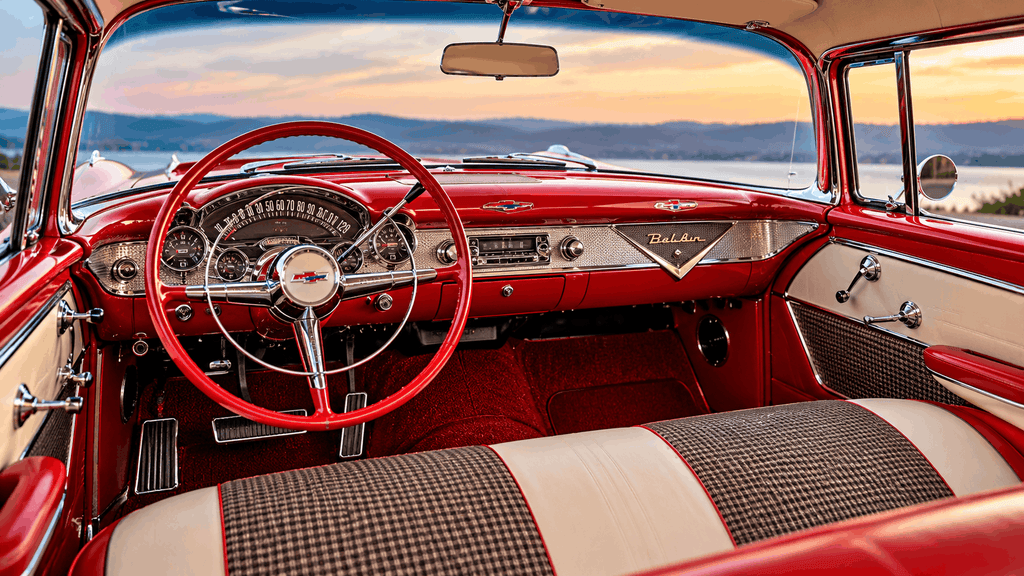
Upholstery and colour choices depended on the trim level and model. Bel Air interiors generally had richer patterns and finishes than a One-Fifty.
The cabin is roomy for its time, and the wide seats suit relaxed cruising. Compared with a modern car, though, it is far more basic. There are no airbags, no electronic driver aids and very little sound insulation.
Which Engines Were Available in the 1957 Chevrolet?
Specifications varied by trim, engine and options, so no single setup was standard across every car. The main options were:
- 235-cubic-inch inline-six (Blue Flame): the base engine on many models, built for smooth, economical running
- 265-cubic-inch V8: a step up for buyers wanting more power
- 283-cubic-inch V8: new for 1957, offered in several states of tune
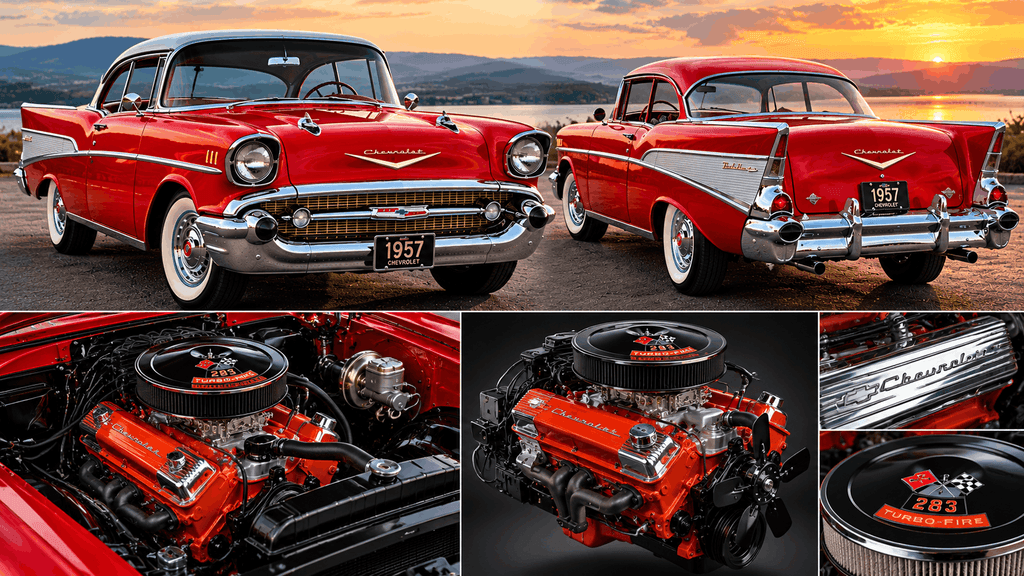
The 283 came with different carburettor setups and power outputs, including higher-performance versions. A fuel-injected 283 was also offered. It became famous for its claim of roughly one horsepower per cubic inch, a milestone for a mass-produced American engine. These figures are gross ratings from the period, so they are not directly comparable with modern net horsepower numbers.
Transmission choices included a three-speed manual, with overdrive on some cars, and automatic options such as Powerglide. Turboglide, a different type of automatic, also arrived for 1957 on certain models.
Features and Technology
For the 1950s, the 1957 Chevrolet offered a respectable list of extras. Depending on the car, buyers could add power steering, power brakes, a radio, a heater and other comfort items. Many cars left the factory with only a few of these.
By modern standards, the technology is simple. There is no stability control, no anti-lock braking and no infotainment. Part of the appeal is that everything is mechanical and easy to understand.
How Does a 1957 Chevrolet Drive?
A 1950s Chevrolet feels very different from a current car. Steering is slower and lighter in feel, brakes require more planning, and the ride is soft and floaty rather than sharp. Handling depends heavily on the car’s condition, tyres and suspension setup.
Fuel use also depends on the engine, transmission, tuning and condition. As a rule, an old V8 or six-cylinder will use much more fuel than a modern small-engine car. Because owners report widely varying figures, it is best not to rely on any single mileage claim.
How Much Is a 1957 Chevrolet Worth Today?
Present-day value is not the same as the original launch price. Collector values can vary enormously depending on:
- Trim level and body style (convertibles and Bel Airs are often the most desirable)
- Originality versus restoration
- Quality of any restoration work
- Engine and transmission, with rare setups such as fuel injection usually valuable
- Overall condition and documentation
Because the market moves, anyone thinking of buying should check recent auction results and trusted valuation guides rather than relying on a single quoted price. Hagerty’s valuation tools and major auction houses are common starting points.
1957 Chevrolet vs. Modern Cars
Against a modern car, the 1957 Chevrolet loses on safety, efficiency, emissions and comfort. Today’s vehicles have crash structures, airbags, advanced braking and far better fuel economy.
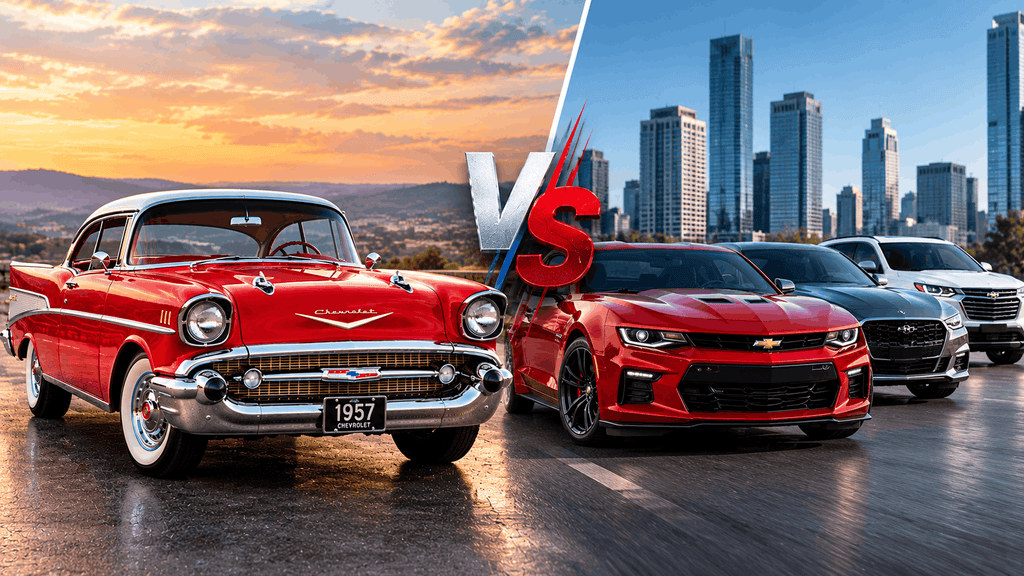
But modern cars cannot offer the same character. The styling, the sound of a V8 and the simple, hands-on driving experience are why enthusiasts choose a vintage Chevrolet over something newer.
Why Is the 1957 Chevrolet Still So Popular?
Several things keep it in the spotlight:
- Nostalgia for 1950s America
- Classic styling that remains recognisable at a glance
- A large restoration community with strong parts support
- Constant presence at car shows, in films and in popular culture
For many people, it is among the best-known classic Chevrolet cars ever built. watch more car details
Frequently Asked Questions
1. Why is the 1957 Chevrolet so famous?
Its styling, tailfins and chrome, along with the new 283 V8 and its place as the final Tri-Five year, made it an instant and lasting icon.
2. Which engines were available in the 1957 Chevrolet?
The 235 inline-six, the 265 V8 and the 283 V8, with several power levels for the 283, including fuel injection.
3. What is the difference between the 1957 Chevrolet Bel Air and Two-Ten?
The Bel Air was the top trim, with more chrome, richer interior finishes and more distinctive exterior trim. The Two-Ten sat in the middle, with simpler trim.
4. How much does a 1957 Chevrolet cost today?
It varies widely with model, condition and originality. Check recent auction results and valuation guides for current figures.
5. Is the 1957 Chevrolet a good classic car to collect?
For many collectors, yes. Strong demand, parts availability and a big community make it popular, but buyers should inspect condition and documentation carefully.