
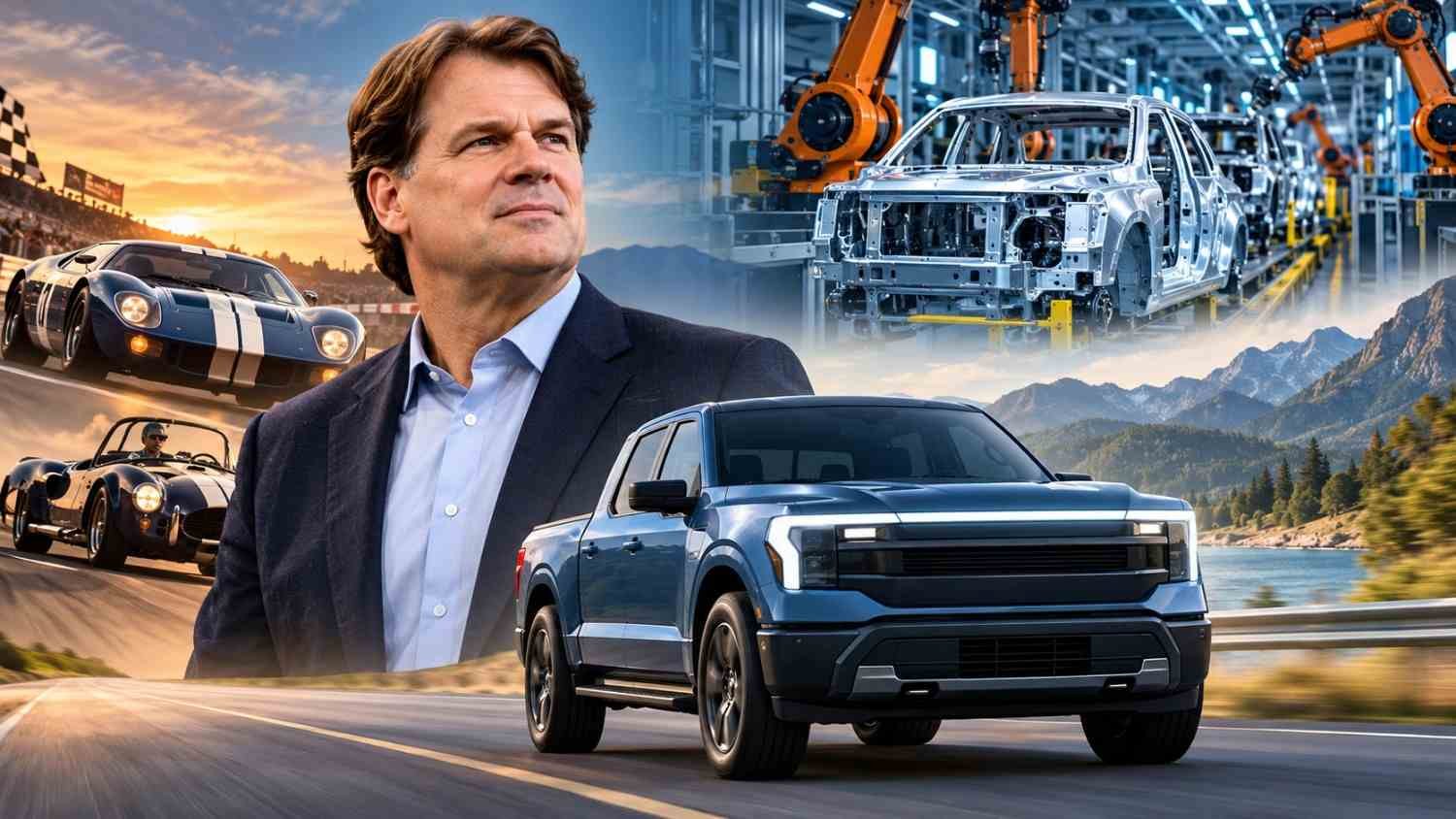
Ford CEO Jim Farley is taking on one of the biggest challenges in the American auto industry: building vehicles that people want to buy while making them more affordable, reliable, and technologically advanced. His latest focus is especially important as Ford prepares a new generation of electric vehicles designed to compete on price, not just performance.
The spotlight is now on the Ford Fathom, an upcoming midsize electric pickup, and the company’s new Universal Electric Vehicle (UEV) platform. Ford has announced a starting MSRP of $28,350 for the Fathom, before delivery charges and other applicable fees. However, questions about production costs and manufacturing timelines remain.
For Farley, the challenge goes beyond launching another electric truck. It is about changing how Ford designs, builds, and supports its vehicles while protecting the qualities that have made the company a major force in the U.S. market.
Who Is Jim Farley, Ford’s CEO?
James D. Farley Jr., widely known as Jim Farley, became president and CEO of Ford Motor Company in October 2020. Before taking the top job, he held several senior positions at Ford, including chief operating officer and leadership roles in global markets, technology, and strategy.
His automotive career began before he joined Ford. Farley started working at Toyota in 1990, gaining experience in product planning, marketing, and strategy. He later became a senior executive at Lexus and helped lead the launch and development of Toyota’s Scion brand in the United States. He joined Ford in 2007, bringing experience from two major automotive businesses.
Farley studied economics and computer science at Georgetown University and earned an MBA from UCLA’s Anderson School of Management. His background combines business strategy with an understanding of how automakers market vehicles and respond to changing customer needs.
That combination matters today. Automakers must compete on more than horsepower and styling. Buyers also care about purchase prices, fuel costs, technology, reliability, and the long-term cost of ownership.
How Jim Farley Is Changing Ford Motor Company
One of Farley’s central initiatives is Ford+, a strategy introduced in 2021 to strengthen Ford’s vehicle business while expanding software, digital services, and customer relationships.
The strategy organizes Ford’s operations around three main business areas:
- Ford Blue: Traditional gasoline-powered and hybrid vehicles.
- Ford Model e: Electric vehicles, digital platforms, and vehicle software.
- Ford Pro: Commercial vehicles and services for business customers.
The idea is to give each business a clearer focus while allowing Ford to serve different types of customers. A family buying a hybrid SUV, an enthusiast purchasing a Mustang, and a company operating a fleet of work trucks do not necessarily have the same needs.
Farley’s approach also recognizes that electric vehicles are not the right choice for every buyer today. Ford can continue selling gasoline and hybrid models while developing EVs that appeal to customers who want lower running costs, home charging, and modern technology.
Software is another major part of this transition. Connected vehicles can receive updates, improve certain functions, and offer digital services after leaving the factory. Ford’s challenge is to make these features useful and dependable rather than simply adding more technology to the dashboard.
Latest Jim Farley News: Ford’s New EV Technology Faces a Critical Test
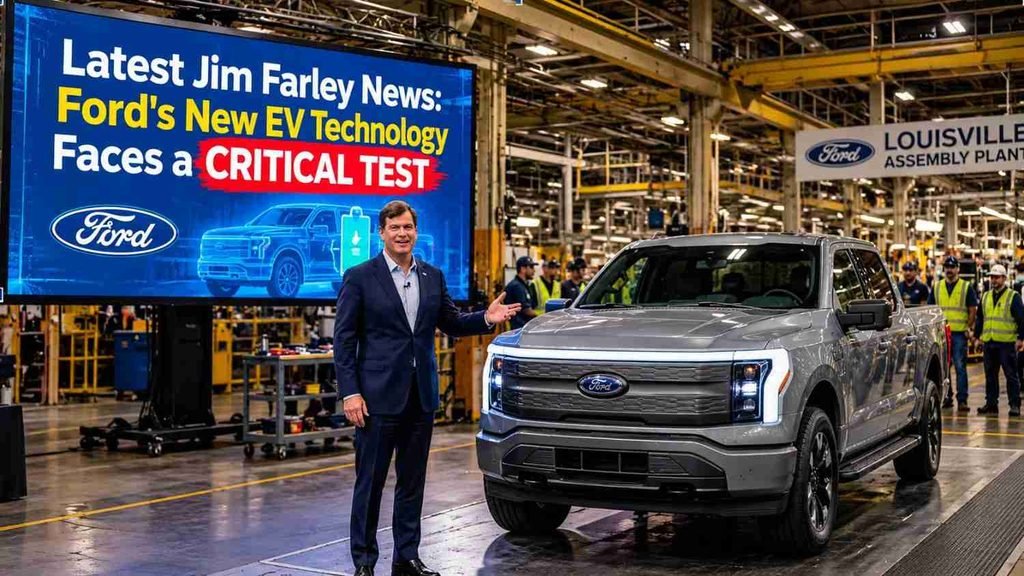
In October 2026, attention has turned to Ford’s next-generation EV manufacturing plans and the technology intended to reduce assembly mistakes.
A report published by Business Insider on October 8 described Farley’s announcement that vehicles using Ford’s new UEV platform will be designed to help verify certain electrical connections during manufacturing. The aim is to identify problems earlier in the production process, rather than discovering them after a vehicle reaches customers.
This is an important issue for Ford because vehicle quality affects customer confidence, warranty costs, and the company’s reputation. Building a new platform is an opportunity to rethink the production process instead of carrying every old manufacturing method into the next generation.
Ford is also changing how vehicles are assembled. The company says the new UEV production system is being developed at its Louisville Assembly Plant in Kentucky, where the Fathom will be built. In an August 13, 2026 update, Ford said prototype builds using production-qualified parts were on track to begin in the first quarter of 2027.
However, the schedule still deserves attention. In late September, Farley acknowledged that achieving mass production at the required scale, cost, and timing would be difficult. Ford has not announced a definitive cancellation of the Fathom’s 2027 launch, but the manufacturing challenge is real.
For buyers, the important question is whether Ford can deliver the promised vehicle at its announced price without compromising quality or delaying availability.
Ford Fathom: Why This Electric Pickup Matters
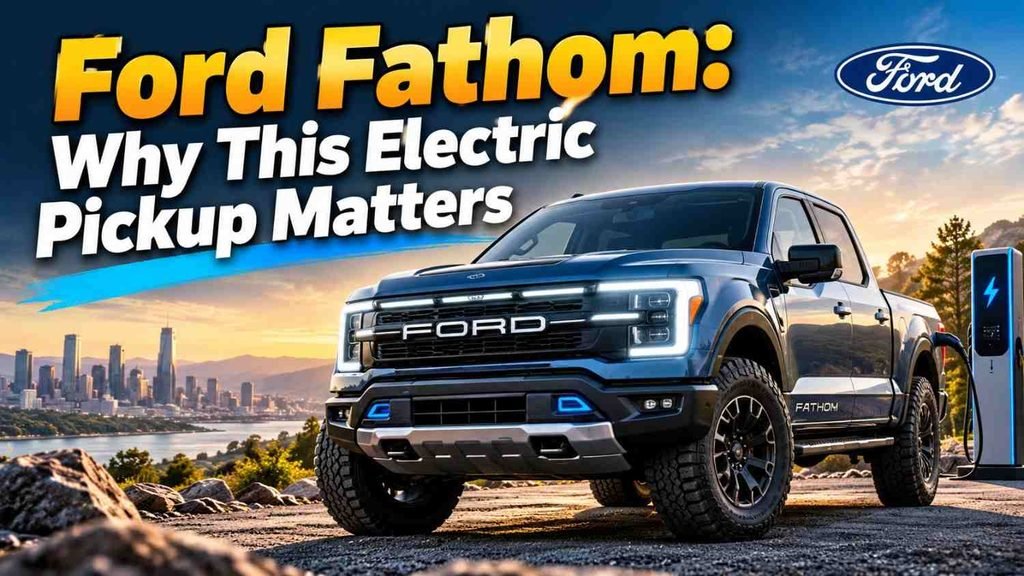
The Ford Fathom could become one of the most important vehicles in Farley’s EV strategy because it targets a part of the market where affordability matters as much as range and performance.
Ford announced the Fathom on August 6, 2026, with a starting MSRP of $28,350 for the standard-range version. The price excludes destination and delivery charges, taxes, and other applicable fees. Ford says preorders will begin in early 2027.
The truck will be the first model based on Ford’s Universal EV Platform. Rather than adapting an existing gasoline vehicle into an electric one, the company has developed a new architecture intended to reduce complexity and manufacturing costs.
Ford has also highlighted features such as next-generation BlueCruise capability, a digital key, Apple CarPlay and Android Auto compatibility, and bidirectional power capability. Final EPA-estimated driving range figures have not yet been published on Ford’s official Fathom page.
That distinction is important. The announced price and planned features provide a useful picture of Ford’s intentions, but buyers will need confirmed range, charging times, trim details, warranty information, and final delivery dates before making a purchase decision.
The Fathom also faces a difficult competitive environment. Affordable electric vehicles must offer convincing value against gasoline pickups, hybrids, and other EVs. Ford will need to show that its new platform can deliver lower costs without creating new reliability or production problems.
Jim Farley’s Vision for Electric Cars
Farley’s EV strategy is increasingly focused on making electric vehicles accessible to a broader group of buyers.
Early electric pickups often emphasized large batteries, high power outputs, and premium features. Those vehicles attracted attention, but their prices could put them beyond the budgets of many mainstream customers.
Ford’s new approach focuses on simplifying the vehicle architecture, reducing manufacturing complexity, and using engineering choices that can support a more affordable product.
Competition from Chinese automakers is one reason this matters. Farley has warned about the competitive pressure these companies could bring to international markets, particularly as they develop vehicles with competitive prices and advanced technology.
For American automakers, the challenge is to match the value offered by competitors while accounting for domestic manufacturing costs, supply chains, and customer expectations.
Still, electric vehicles are only one part of Ford’s plans. Gasoline-powered models and hybrids remain important to buyers who need long driving range, towing capability, or flexibility without relying on charging infrastructure.
Rather than assuming every customer will switch to an EV at the same time, Ford’s strategy gives buyers different powertrain choices while the market develops.
How Farley’s Leadership Could Affect Ford’s Future
Farley’s decisions will influence more than the vehicles Ford sells. They also affect factory investment, software development, supplier relationships, and the way the company handles product quality.
Three areas deserve particular attention.
1. Vehicle quality and reliability
A lower purchase price means little if a vehicle develops recurring problems. Ford’s plans to improve manufacturing checks and simplify assembly are intended to address quality earlier in the process. The real test will be how consistently these improvements translate into vehicles on the road.
2. Manufacturing efficiency
A simpler platform can reduce the number of parts and manufacturing steps required to build a vehicle. If Ford can achieve those savings at scale, the company may be better positioned to offer affordable EVs while protecting its margins.
3. Connected technology
Software-defined vehicles can receive updates and support new digital functions over time. Ford must ensure that these systems are secure, easy to use, and reliable. For customers, technology should make daily driving more convenient rather than more complicated.
These priorities create opportunities, but they also involve risk. Developing a new platform requires substantial investment, and production delays can affect costs and customer confidence. Ford must demonstrate that its plans work in everyday manufacturing, not just in engineering presentations.
Jim Farley Beyond the CEO Role: A Passion for Classic Cars
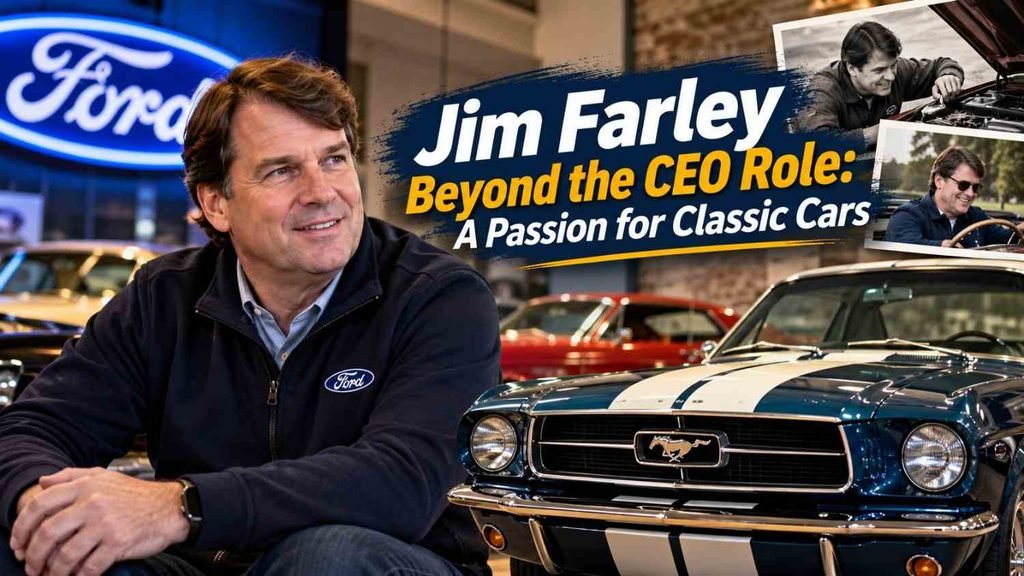
Farley’s interest in cars extends well beyond boardrooms and factory visits. He is a vintage-car collector and racer who has competed in historic motorsport events.
Among the vehicles he has raced are a 1965 Ford GT40, a 1966 Shelby 427 Cobra, and a 1978 Lola 298. His participation in historic racing reflects a personal interest in automotive engineering and driving, rather than simply the business of selling vehicles.
His connection to the GT40 is particularly relevant to Ford enthusiasts. The model is closely associated with Ford’s endurance-racing history, including its famous battles at Le Mans.
Farley’s enthusiasm does not guarantee that every decision he makes will succeed, but it gives him a direct connection to the products, performance, and driving experiences that matter to many enthusiasts.
What Could Come Next for Ford?
The next major milestone will be Ford’s ability to move the Fathom from development into repeatable, high-volume production.
The company has announced plans for a new electric vehicle platform and a redesigned manufacturing system. The key questions are whether Ford can maintain its intended price, meet its production targets, and deliver the reliability customers expect.
Buyers should watch for confirmed updates on EPA-estimated range, charging performance, final specifications, preorder availability, and production timing. Ford’s official announcements will be more useful than unverified claims about specifications or delivery dates.
The broader strategy will also be worth following. Ford must balance its established gasoline and hybrid businesses with investments in electric vehicles, connected services, and manufacturing technology.
Jim Farley’s biggest challenge is not simply making Ford more electric. It is making Ford’s next generation of vehicles affordable, dependable, and competitive enough to succeed in the real world. The Fathom will be an important test of whether the company’s new approach can deliver on that ambition.
Frequently Asked Questions About Jim Farley
1. Who is Jim Farley?
Jim Farley is the president and CEO of Ford Motor Company. He leads the company’s strategy across gasoline vehicles, hybrids, electric vehicles, commercial vehicles, software, and connected services.
2. When did Jim Farley become Ford’s CEO?
Jim Farley became Ford’s CEO in October 2020, succeeding Jim Hackett.
3. What is Jim Farley’s role at Ford?
He oversees Ford’s overall business strategy, product direction, manufacturing priorities, and efforts to compete in a changing automotive market.
4. What is the Ford+ strategy?
Ford+ is Ford’s business strategy, introduced in 2021, to strengthen its vehicle operations while expanding electric vehicles, software, and customer services.
5. What is Jim Farley’s vision for electric vehicles?
His approach focuses on making EVs more affordable and efficient to produce while improving technology and retaining gasoline and hybrid options for customers who need them.
6. What is Jim Farley’s connection to motorsport?
Farley collects and races vintage cars, including a Ford GT40 and a Shelby Cobra. He has participated in historic racing events and maintains a strong personal interest in automotive performance.
7. What are Ford’s latest plans under Jim Farley’s leadership?
One major priority is the Universal EV Platform and the upcoming Ford Fathom electric pickup. Ford has announced a starting MSRP of $28,350, with preorders planned for early 2027. The company is still working through the challenges of large-scale production.