
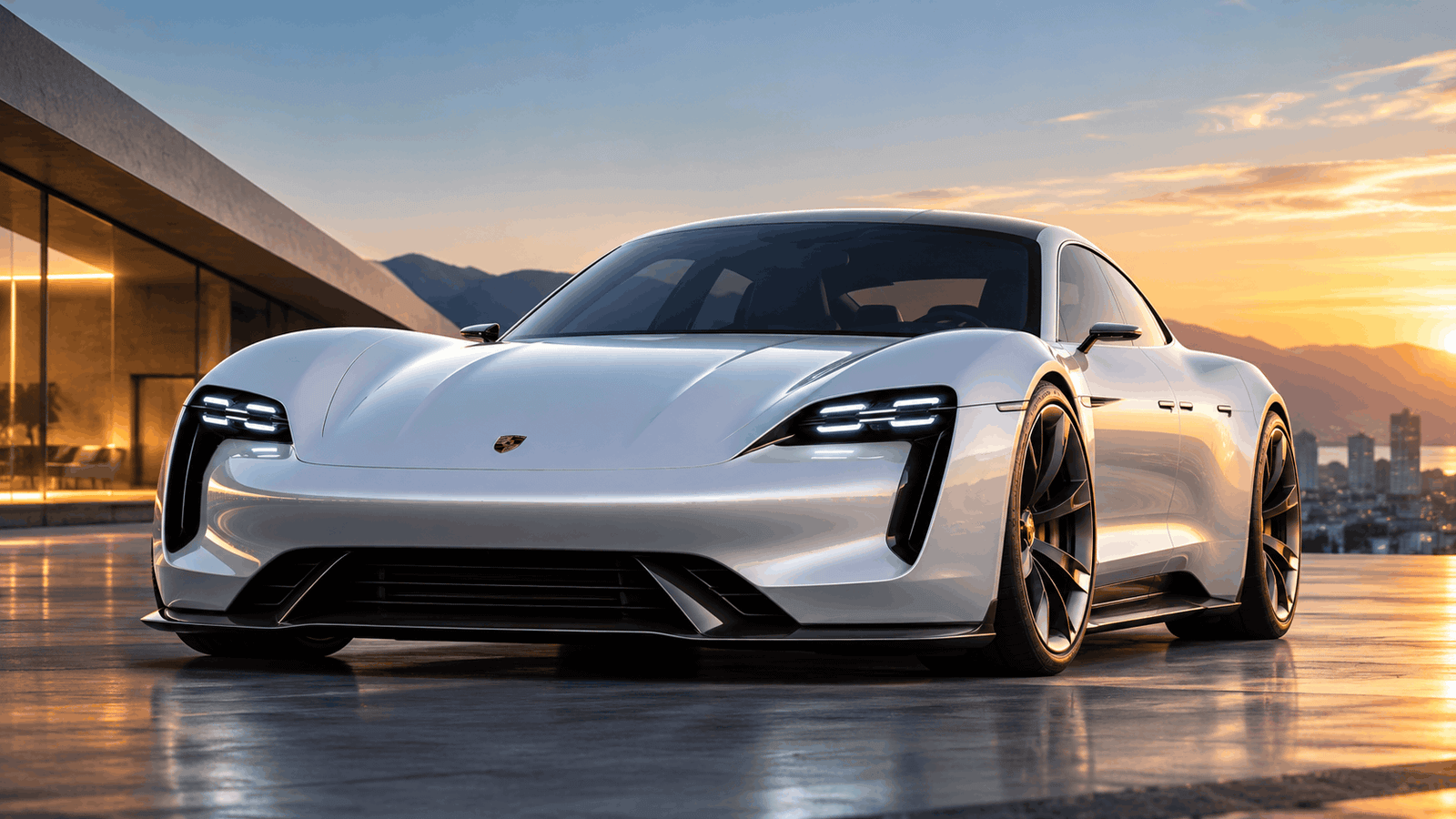
The name “Porsche Mission S” keeps turning up in searches and online discussions about electric sports cars. There is a problem, though: Porsche has not officially announced a vehicle with that name, at least in the sources reviewed for this article.
That matters because the name sounds plausible. Porsche has used the “Mission” label for several real concepts, so it is easy to assume a Mission S exists. This article explains what is confirmed, what is not, and which real Porsche models readers may be thinking of.
What Is the Porsche Mission S?
Based on available information, the Porsche Mission S is not an official Porsche concept or production car. No Porsche newsroom release, model page or technical document that I am aware of uses the name.
There are several possible explanations:
- A mix-up with a real concept. Porsche has revealed the Mission E, Mission R and Mission X. “Mission S” could be a misremembered version of any of them.
- A fan-made rendering. Digital artists often create imaginary Porsche models, and these can spread online with convincing names.
- A speculative or AI-generated image. Such images are not evidence that a car exists.
- A future announcement. Porsche could reveal something new, but readers should treat that as unconfirmed until the company says so.
Search suggestions, social media posts and AI-generated pictures are not proof of a real vehicle. Only Porsche’s own announcements, or reporting that clearly cites them, can establish that.
Porsche Mission S Design and Exterior Styling
There is no official design to describe. Porsche has not published images, sketches or a design brief for a car called Mission S, so any detail about its headlights, roofline or rear end would be invented.
What can be said is what Porsche’s real electric concepts and cars look like, since any future electric sports car would likely draw on them.
- Mission E (2015): a low four-door coupe with a sloping roofline, four-point LED headlights and a light bar across the rear. It was the clear design ancestor of the Taycan.
- Mission R (2021): a track-focused electric concept with a wide stance and a large rear wing, showing how Porsche thinks about electric racing.
- Mission X (2023): a two-seat electric hypercar concept with doors that open upward, positioned as a modern successor to Porsche’s halo cars.
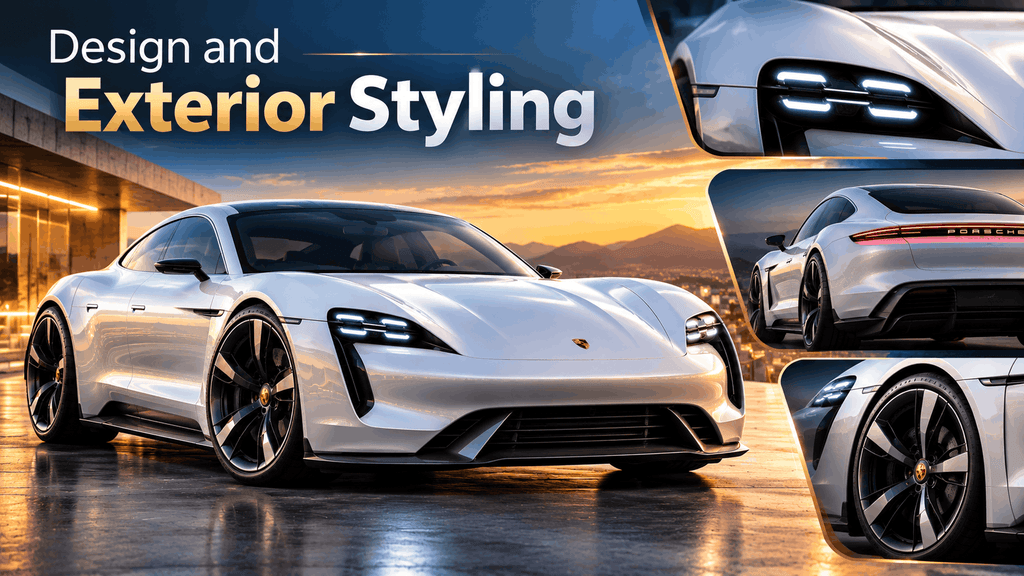
Any “Mission S” image that mixes these cues is hypothetical, and a styling similarity does not make it a real Porsche.
Electric Powertrain, Motor and Performance
No official motor, horsepower, torque, acceleration or top-speed figures exist for a Porsche Mission S. Anyone quoting numbers for it is guessing.
For context, Porsche’s real electric performance numbers come from the cars it has built. The 2015 Mission E concept was announced with about 600 PS (roughly 590 hp) from two permanent-magnet motors, with 0-62 mph in under 3.5 seconds. Those were concept targets, not production figures.
The production Taycan arrived in 2019 and has since been updated. Its top versions use two electric motors and all-wheel drive, with the Turbo GT variants offering well over 1,000 hp in their most extreme setups and 0-60 mph times of roughly two seconds. Exact figures vary by model, year and test conditions, so check Porsche’s current Taycan page for the version you care about.
Battery, Driving Range and Charging Technology
There is no confirmed battery size, range estimate or charging speed for a Mission S.
Porsche’s established EV technology gives a sense of where its engineering stands:
- 800-volt architecture. Porsche introduced this on the Taycan, allowing very fast DC charging compared with most 400-volt EVs.
- Fast charging. The Taycan can charge from about 10% to 80% in roughly 18 to 22 minutes under ideal conditions, depending on the model year and battery.
- Battery size. The updated Taycan offers batteries of around 90 to 105 kWh gross capacity, depending on version.
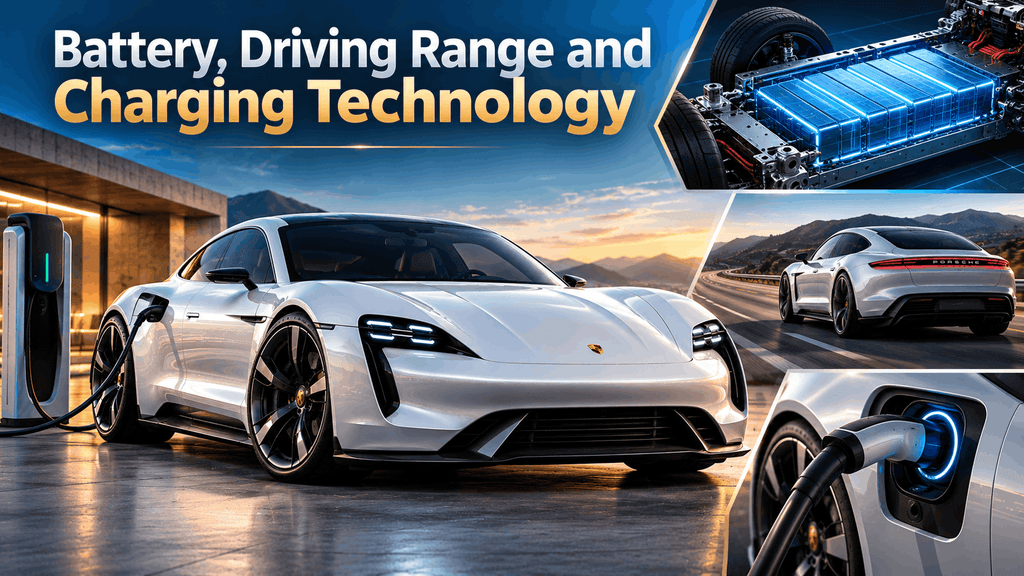
Range depends on battery, wheels, temperature and driving style, and official EPA and WLTP figures differ. Do not attach any of these numbers to the Mission S.
Interior, Technology and Comfort
No Porsche Mission S interior has been shown. There is nothing confirmed about its cockpit, screens, seating, driver assistance or materials.
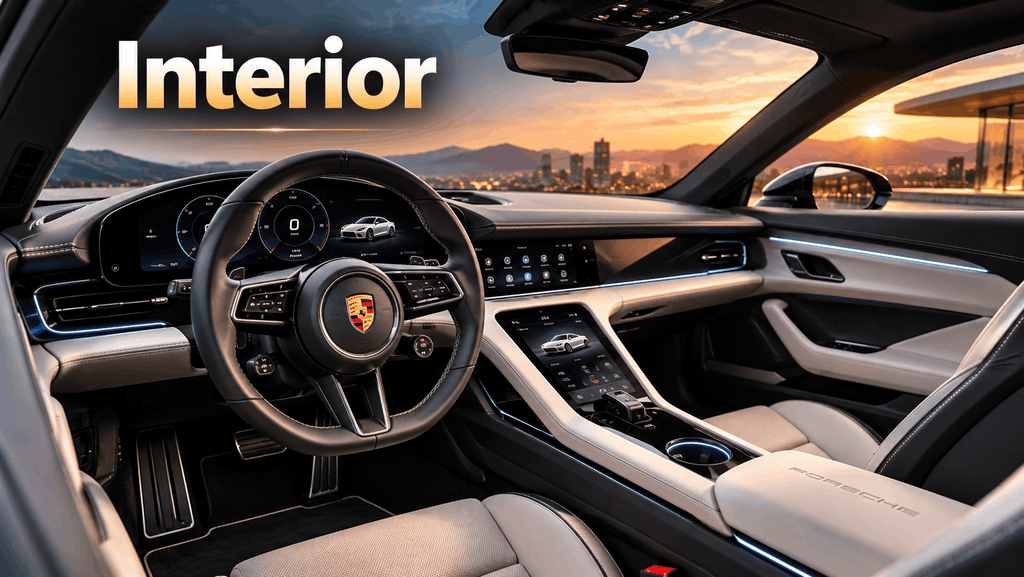
Real Porsche EVs offer a reference point. The Taycan combines a curved digital instrument cluster, a central touchscreen and, on many versions, a passenger display, while keeping some physical controls. Sustainable and leather-free material options have also been offered. None of this tells us anything about a Mission S.
Porsche Mission S vs Porsche Mission E and Taycan
The Mission E is the real story here. Porsche unveiled it at the 2015 Frankfurt Motor Show, and the production version became the Taycan, launched in 2019. The Taycan carried over the Mission E’s core idea: an electric four-door sports car with 800-volt charging.
| Feature | Porsche Mission S | Porsche Mission E (2015 concept) | Porsche Taycan (production) |
| Status | Not officially announced | Official concept | On sale |
| Powertrain | Not officially announced | Two electric motors, all-wheel drive | Electric, multiple versions |
| Performance | Not officially announced | About 600 PS; 0-62 mph under 3.5 s (target) | Varies by version; top models around 2 s to 60 mph |
| Range | Not officially announced | About 500 km NEDC (target) | Varies by battery and test cycle |
| Charging | Not officially announced | 800-volt; about 80% in 15 minutes (target) | 800-volt; fast DC charging |
| Availability | Not officially announced | Concept only | Sold in many markets |
Concept figures such as the Mission E’s are targets from a design study, not guarantees. Production cars often differ.
Expected Price and Launch Date
Porsche has not announced a price, launch date, production plan, reservation system or regional availability for a Mission S. Any “expected” date or starting price seen online is unsupported.
If Porsche does announce something new, it would almost certainly appear first in its newsroom and on its official model pages.
How the Porsche Mission S Could Fit into Porsche’s EV Strategy
Since the Mission S itself is unconfirmed, this section covers Porsche’s wider strategy, not any claim about a specific car.
Porsche has long said it wants electric cars to be a large share of its sales, and it has launched the Taycan and the electric Macan. It has also said a battery-electric 718 Boxster and Cayman are coming, and an electric Cayenne has been part of its plans. At the same time, the company has adjusted its approach in recent years, keeping combustion and hybrid models in the lineup longer as EV demand has varied by region.
The takeaway is that Porsche is pursuing a mixed approach. It is developing electric performance technology while keeping combustion options. For the latest plans, readers should consult Porsche’s newsroom and company statements, because these have changed over time and may have changed again since this was written.
Potential Rivals and Electric Sports-Car Competition
It would be a mistake to say a Mission S competes with any particular car, since the Mission S is not an established product. But the electric performance market is real, and Porsche’s existing models face rivals such as:
- Tesla Model S Plaid: very high straight-line performance, with a different focus from Porsche’s driver-oriented tuning.
- Lucid Air Sapphire: a performance-focused luxury sedan with high-output variants.
- Audi RS e-tron GT: a close relative of the Taycan, built on shared technology.
- Mercedes-AMG and BMW electric performance models: further competitors in the performance-EV space.
Compare these using each maker’s current official specifications, since figures change with model year.
Conclusion
The Porsche Mission S is not a confirmed Porsche car. The name appears to come from a mix of real “Mission” concepts, online speculation and possibly fan-made imagery.
The verified story is the Mission E, which evolved into the Taycan and helped define Porsche’s electric performance identity. Readers who want a real electric Porsche today can look at the Taycan and the company’s other EVs.
Porsche’s direction is clear enough: it wants to build fast, well-engineered electric cars while keeping its combustion heritage alive. Whether a car called Mission S ever joins that story is something only Porsche can say.
Frequently Asked Questions
1. What is the Porsche Mission S?
Based on available information, it is not an official Porsche model or concept. It may be a mistaken or speculative name.
2. Has Porsche officially announced the Mission S?
Not as far as I could verify. Check Porsche’s newsroom for any update.
3. Is the Porsche Mission S a fully electric car?
Porsche has not confirmed a Mission S at all, so its powertrain is unknown. The real Mission E, R and X concepts were electric.
4. What are the expected horsepower and acceleration figures?
None have been announced. Porsche has not confirmed any figures.
5. What battery and driving range could it offer?
Porsche has not confirmed a battery or range for a Mission S.
6. What is the expected price of the Porsche Mission S?
No official price exists.
7. When could the Porsche Mission S launch?
Porsche has not confirmed any launch date.
8. Is the Porsche Mission S related to the Porsche Mission E or Taycan?
There is no confirmed link. The Mission E is a real concept that led to the Taycan, and the “Mission S” name may simply be confused with it.