
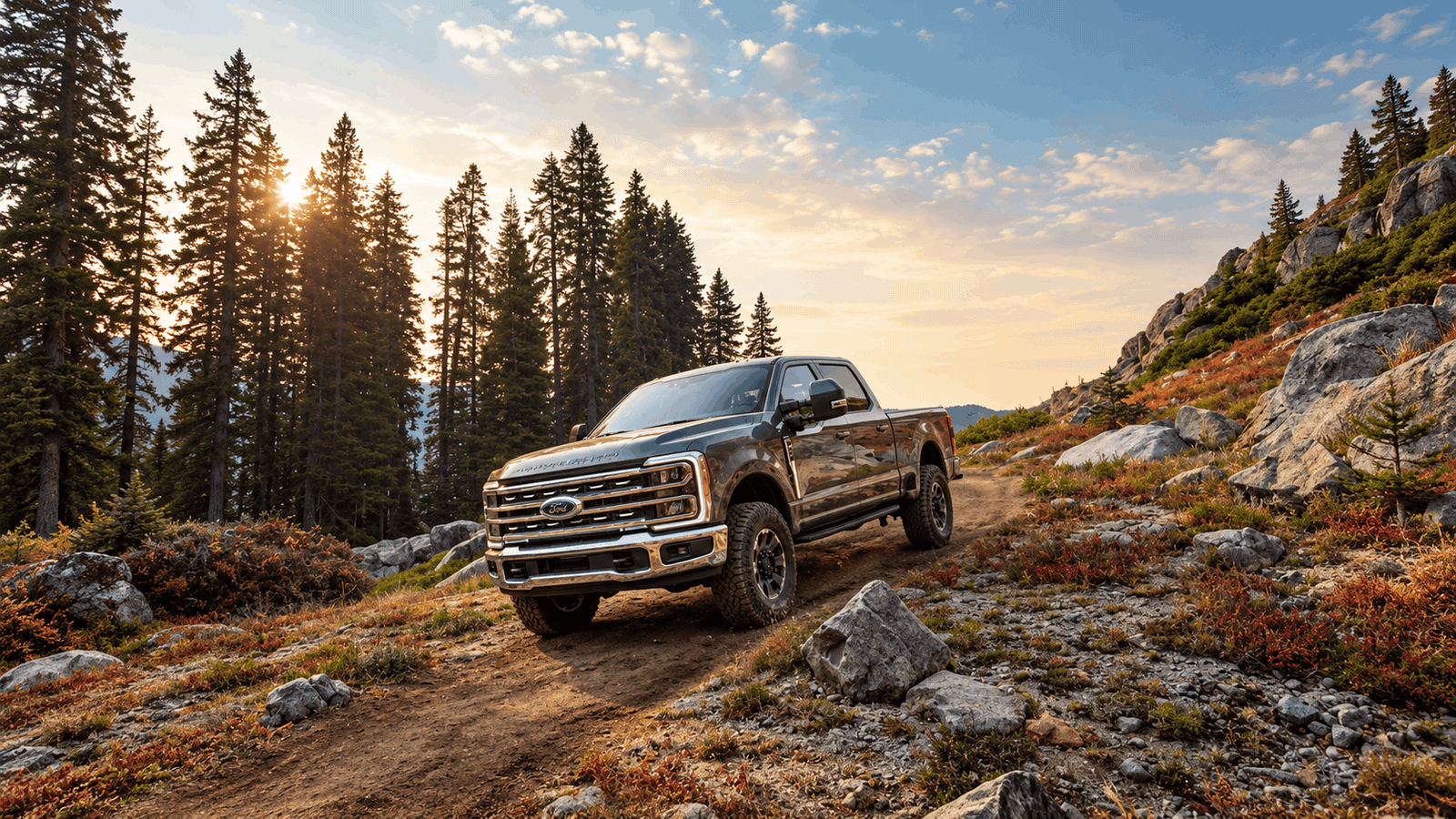
A parked truck that moves on its own is one of the most frightening things that can happen to a driver. A vehicle weighing several tons can injure someone or damage property in seconds. That is why searches for the Ford Truck Rollaway Defect Settlement keep appearing among truck owners and buyers.
The facts need careful sorting, though. Ford has issued recalls over unintended vehicle movement, and owners have filed lawsuits over various drivetrain complaints. Those are not the same as a verified, court-approved settlement. This article explains what is documented, what is not, and how to check your own truck.
What Is the Ford Truck Rollaway Defect?
A rollaway happens when a vehicle moves after the driver believes it is secured. It might drift while the driver steps out, or move after being left in what looked like Park. ford truck rollaway defect settlement
Several systems are involved in keeping a truck stationary:
- The transmission’s park mechanism. In most automatics, a small metal pawl engages a notched ring inside the transmission to lock the output shaft.
- The gear selector. Modern trucks may use a column shifter, a console lever, or a rotary dial. Electronic selectors rely on software and sensors to confirm the selected gear.
- The parking brake. Many newer trucks use an electronic parking brake instead of a hand lever.
- Driver alerts. Dashboard indicators and chimes tell the driver which gear is engaged.
A fault in any of these, or a gap between what the driver selects and what the truck does, could contribute to unintended movement.
Four terms are easy to confuse:
- Alleged defect: a claim made by plaintiffs in a lawsuit, not yet proven.
- Confirmed defect: a problem acknowledged by the manufacturer or established by a regulator or court.
- Recall: a manufacturer or NHTSA-driven safety remedy, usually a free repair.
- Court-approved settlement: a legal resolution approved by a judge, with defined terms and eligibility.
A recall does not guarantee a settlement, and a lawsuit does not prove a defect.
Which Ford Truck Models May Be Affected?
I could not verify a single case that ties a specific set of Ford trucks to a confirmed rollaway settlement. Past Ford recalls involving unintended movement have applied to narrow groups of vehicles, defined by model year, build dates, powertrain, and sometimes a specific component supplier.
For that reason, do not assume your truck is affected because it is a Ford pickup, or that it is safe because it is not named in a news story. Affected-vehicle lists are specific, and the only reliable way to know is to check your VIN against Ford’s recall tools and NHTSA’s database.
Any article claiming a broad list of models should cite a recall number or court document. If it doesn’t, treat it with caution.
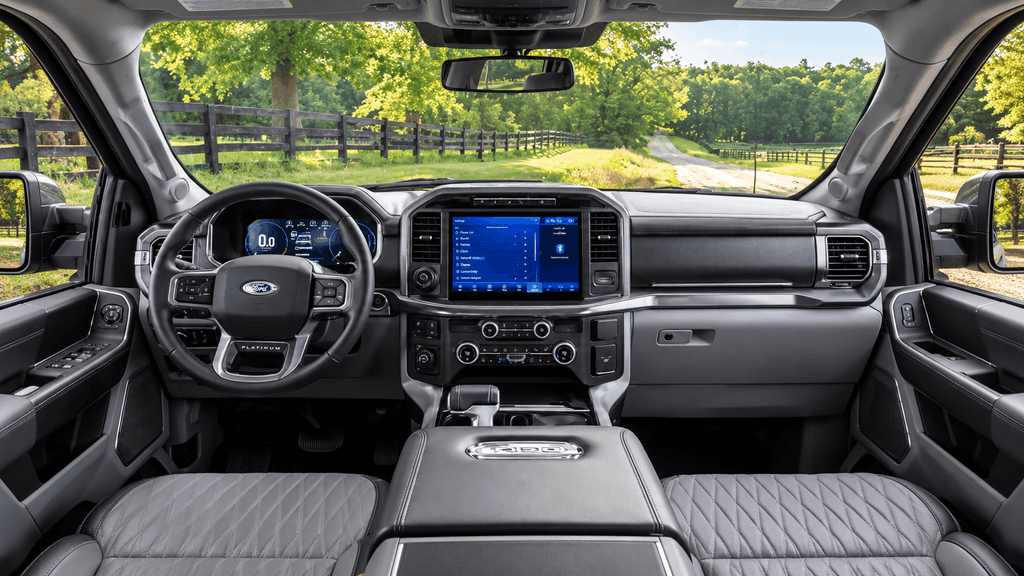
Ford Truck Interior and Exterior: Features Related to Safety
Design details do not cause a rollaway, but they affect how clearly a driver can tell the truck’s state, and how serious the result of an unexpected movement could be. Features vary by model, year, and trim. ford truck rollaway defect settlement
Interior
- Gear shifter and controls. Depending on the truck, this may be a column lever, console shifter, or rotary dial. The park position should be clearly distinguishable.
- Gear-position indicators. The dashboard or driver display should show the selected gear.
- Warning lights and chimes. Many trucks sound an alert if the driver door opens while the truck is not in Park.
- Brake pedal and parking brake. The brake pedal must be pressed to shift out of Park, and the parking brake, mechanical or electronic, adds a second layer of holding force.
- Driver information display. Messages here may report a transmission or parking-system fault.
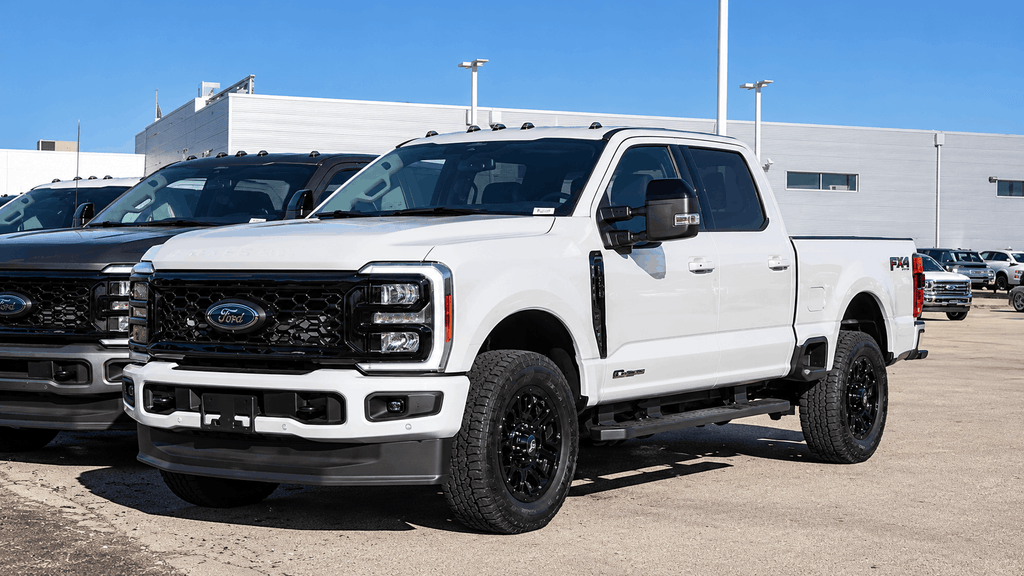
Exterior
- Body size and ground clearance. Taller, heavier trucks can have limited visibility near the front and rear bumpers, which matters if one begins moving.
- Wheels and tires. Tire condition and wheel position affect how a truck behaves on a slope.
- Doors, tailgate, and bed. People often stand near these areas while loading or unloading, which puts them close to the vehicle.
The truck’s styling does not cause a rollaway defect. These features matter because they shape how a driver recognizes a problem and who might be nearby if one occurs. ford truck rollaway defect settlement
What Are the Main Safety Risks?
Unintended movement can lead to:
- Collisions with other vehicles, garage walls, or structures.
- Property damage, especially in driveways and parking lots.
- Injuries to pedestrians or to people standing near the truck, including children.
- Injuries to the driver or occupants, particularly if someone is half in and half out of the vehicle.
A potential safety hazard is not the same as a documented pattern of incidents. NHTSA complaint records show what owners have reported, but individual complaints are unverified accounts and do not establish a defect on their own. Recall filings and investigation documents carry more weight. Responsible reporting separates the two.
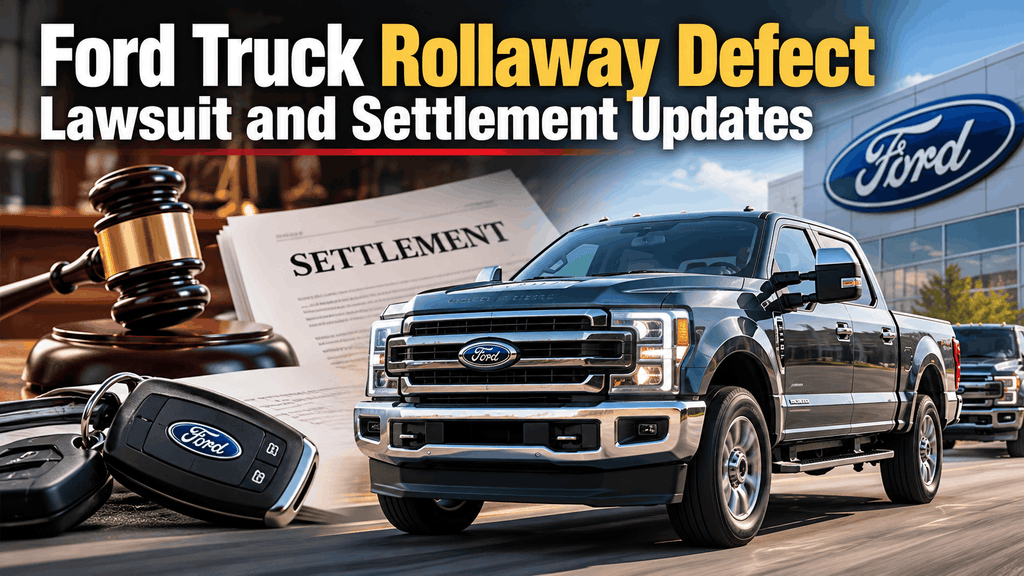
Ford Truck Rollaway Defect Lawsuit and Settlement Updates
Owners of various Ford vehicles have filed lawsuits over drivetrain and transmission complaints. Because I could not verify the specifics, I cannot responsibly give you a case name, court, filing date, current status, or settlement terms for a Ford truck rollaway case.
Here is what I can say:
- A Ford truck rollaway defect lawsuit should name a specific court and case number. If you cannot find one, be skeptical.
- Plaintiffs’ allegations are claims, not findings. Ford’s response, typically a denial of wrongdoing in settlements, appears in court filings.
- A real settlement has a dedicated website, a claim deadline, a final approval hearing date, and a notice describing who is covered.
- Any claimed payout figure should trace back to those official documents.
If you cannot find that paperwork, a confirmed Ford Truck Rollaway Defect Settlement may not exist yet.
Who May Qualify for Compensation?
Eligibility can only be stated accurately from an official settlement notice. Typical criteria in vehicle class actions include:
- Ownership or lease of a qualifying model and model year.
- Purchase or lease within a defined date range or in a certain state.
- Documented repair expenses related to the covered problem.
- Submitting a claim before the deadline with required proof.
Owning a Ford truck does not automatically qualify you for compensation. Even in an approved settlement, payment depends on meeting the stated terms and the claims process.
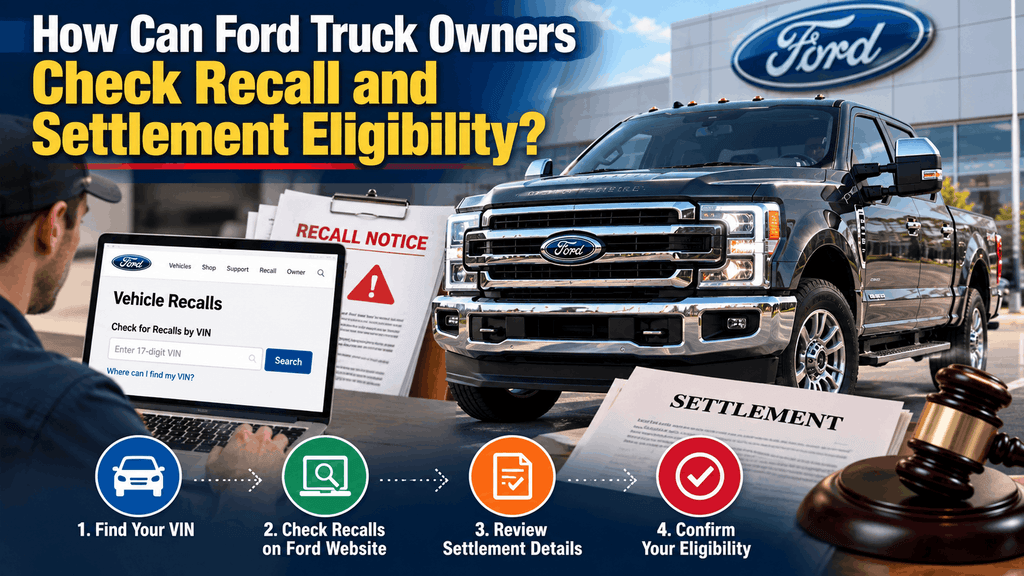
How Can Ford Truck Owners Check Recall and Settlement Eligibility?
- Find your VIN. It is on the driver-side dashboard near the windshield, the driver door jamb sticker, and your registration or insurance card.
- Check Ford’s official recall resources. Enter your VIN on Ford’s owner site to see open recalls.
- Search NHTSA’s recall database. NHTSA’s website allows VIN lookups and shows recalls, investigations, and complaints.
- Review official settlement websites and court notices. If a settlement exists, the notice will list a website and a claims administrator. Be wary of lookalike sites.
- Keep your records. Save repair invoices, purchase or lease paperwork, recall letters, and photos or notes of any incident.
- Consult a qualified US attorney if needed. For questions about your rights or deadlines, a licensed attorney can advise on your situation.
ford truck rollaway defect settlement
What Should Owners Do If Their Truck May Roll Away?
- Follow the owner’s manual. Press the brake, shift fully into Park, apply the parking brake, and turn off the engine.
- Turn the wheels on slopes. Point them toward the curb when facing downhill, as your manual recommends.
- Check for recalls. Confirm there are no open notices on your VIN.
- Watch for warning signs. Gear indicators that disagree with the selector, fault messages, or difficulty shifting into Park are reasons to get the truck inspected.
- Stop using it if it is unsafe. Contact an authorized Ford dealer or a qualified mechanic.
- In an emergency, get clear. If a truck is moving and you cannot safely stop it, move away from its path and call 911.
Conclusion
Unintended movement is a real safety issue, but a recall, a lawsuit, and an approved settlement are different things. As of this writing, a confirmed Ford Truck Rollaway Defect Settlement could not be verified, so rely on official records instead of rumors or unsourced payout claims.
Check your VIN with Ford and NHTSA, keep your repair and purchase records, and consult official sources before making any decision about a claim.
Frequently Asked Questions
1. Is there a confirmed Ford Truck Rollaway Defect Settlement?
I could not verify one. Check Ford’s recall pages, NHTSA, and court records for the latest status.
2. Which Ford truck models and years are involved?
No verified, settlement-specific list was confirmed. Ford recalls on unintended movement have covered limited model years and configurations, so check your VIN rather than relying on general lists.
3. How can I check whether my Ford truck is affected?
Enter your VIN on Ford’s official recall tool and NHTSA’s recall lookup. These show open safety recalls for your specific truck.
4. How much compensation can eligible owners receive?
No confirmed amount exists in verified sources. Any figure should come from an official settlement notice.
5. What should I do if my parked Ford truck moves unexpectedly?
Keep people clear, secure the truck if it is safe to do so, stop driving it, and contact an authorized dealer. Report the incident to NHTSA and keep records.